
“Aged, Infirm, or otherwise incapacitated”
By charles Turner
“Aged, Infirm, or Otherwise Incapacitated”
That was the specific language used in the trust created over three quarters of a century ago by the widow of a Colorado lawyer and US Senator to benefit other Colorado lawyers. That lawyer, Charles Waterman, died in 1932, but his widow, Anna, survived him until 1939.
We were not privy to those conversations, the ones between Senator Charles W. Waterman and his wife Anna Rankin Waterman, but we can speculate what might have been said or at least hinted at. The concept of the Denver Bar Association’s Waterman Fund must have been discussed, or it could have been something unsaid much like a lot of issues between spouses; simply understood. Nevertheless, as a result of Charles’ widow, Anna, about 8 million dollars now rests in Colorado. The purpose of this money is:
“For the sole and only purpose of relieving the financial necessities, assuaging the hardships and lightening the financial burdens of aged, infirm or otherwise incapacitated members of the Colorado Bar, in good repute and standing, and who shall have practiced law in Colorado for a period of at least 10 years….”
Charles W. Waterman, a Vermont native, Michigan Law trained, successful Denver practitioner, and Colorado United States Senator maintained, throughout his life, an affinity and affection for his fellow Colorado lawyers notwithstanding his, and his wife’s, decampment to Washington D.C. The story of Charles Waterman, and his wife Anna Rankin Waterman, was well told by Elizabeth Paul, a Denver lawyer, in an article published in The Colorado Lawyer in July of 2000. Senator Waterman’s move to Colorado from Vermont via Michigan Law earned him his reputation as “one of the best civil practitioners in the state.” He was variously described as:
“…a man of liberal culture, broad-minded and of high ideals, has always been a great reader and student and many of his happiest hours are spent in his library in the companionship of men of all ages. Because of the innate refinement of his nature he avoids everything common and finds his greatest pleasure in those things which are an intellectual stimulus and of cultural value.”
Charles’ practice brought him in close contact with the senior partner of the firm, Edward O. Wolcott, who just happened to be Colorado’s seventh United States Senator. Upon having a taste for politics, Charles organized Republicans in 1923 for Calvin Coolidge and was rewarded by the newly elected president with an appointment as general counsel to the Oil Conservation Board in Washington D.C. That ailment known as “Potomac Fever” gripped him and he decided to run for the Senate seat from Colorado which resulted in success due to his outstanding reputation for law, foresight, business, and judgment. He and Anna settled more permanently in D.C. He quickly established a reputation there for “forensic skill, precision in argument and power in debate.” Regretfully, his full term would not be completed as in declining health, he died just three months before his six years was up, August 27th, 1932.
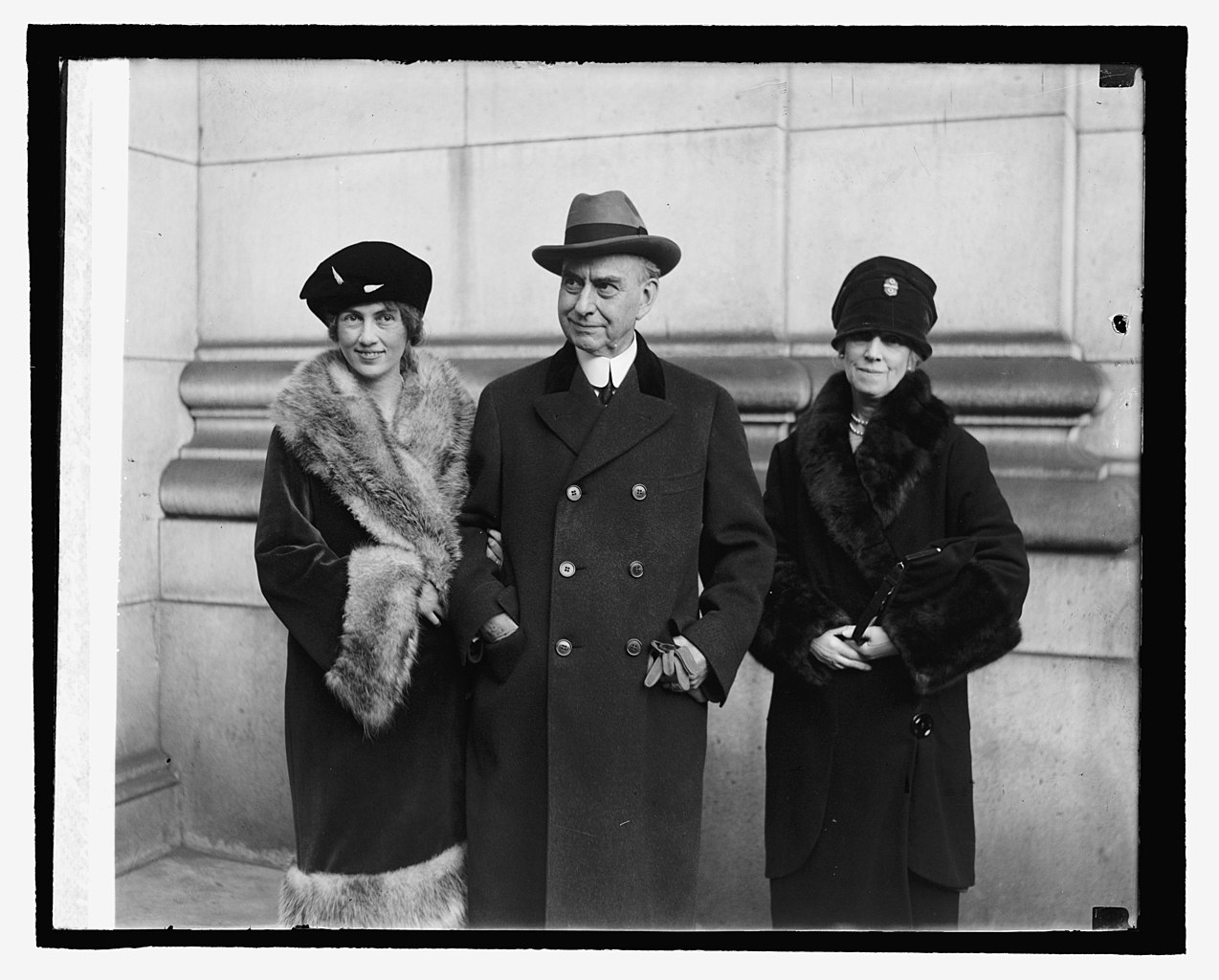
Charles’ will left the bulk of his estate to his wife Anna, and here is where the picture has faded as we don’t know precisely what transpired between Charles and Anna. However, we do know that Anna, on her death in 1939, provided for a number of beneficiaries, but directed that once all those beneficiaries died, the income from the trust thus established should go to the Denver Bar Association for the purposes set out to benefit Colorado lawyers.
Was this Anna’s sole doing? Charles’ will makes no mention of this kind of bequest, but it is hard to imagine that Anna’s directions were not somehow influenced by Charles and his legal career here in Colorado. Had they had acquaintances, or colleagues, who had fallen on hard times due to financial setbacks or health issues? Did they know the cost and burdens that those similarly afflicted and sought to set up a fund to assist them? We simply cannot know, but reasonable speculation would suggest that this was, in part, a mutual goal.
“…from the original bequest of $400,000,
the trust has grown to over $8 million dollars…”
What we do know is that in 1963 the last of the named beneficiaries died and, in the words of the then Denver Bar President, William Cantwell (a highly regarded estate and trust lawyer in his own right), the trust “ripened.” He set up a committee, now known as the 5 Waterman Attorney-Administrators, to effectuate the purposes spelled out in Anna’s will. Lou Isaacson, who also was a founding administrator of Rose Memorial Hospital, served as the first chair of that group and did so for over 20 years. Ripened indeed: from the original bequest of $400,000, the trust has grown to over $8 million dollars and, in the intervening years, has paid out well over a million dollars to numerous qualifying beneficiaries. To seek a measure of how grateful recipients are one need only know that the widow of one recipient bequeathed $94,800 to the fund to thank the Association and the Fund for assistance her husband received during his bout with multiple sclerosis.
The administrators review applications and decide on grants to those who qualify under the terms of the trust, specifically: having practiced law in Colorado for 10 years, in good standing, and meeting the general definition of “aged, infirm or otherwise incapacitated.” Over the years, lawyers laboring under various diseases or maladies, cancer, Parkinson’s, accidents, clinical depression, etc. have been recipients of either one-time or ongoing grants that assist them in “relieving the financial necessities, assuaging the hardships and lightening the financial burdens” of their current situation.
All applications are strictly confidential and the only persons aware of who applies, and who receives aid, are the five administrators, one Denver Bar Association staff person, and the financial institution holding and disbursing the funds. No other member or officer of the Denver Bar is privy to that confidential information.
Even though the Fund was set up and is managed under the direction of the Denver Bar Association, recipients need not be members of the Denver Bar Association or any bar association or Denver residents. Recipients over the years have come from all corners of the state.
For further information, or to obtain an application for benefits, go to the Denver Bar Association Waterman Fund Application page.