
In Memoriam:
William Harold Flowers, Jr.
By Hon. Gary M. Jackson
William Harold “Sonny” Flowers, Jr., and I had been friends for 56 years, meeting in 1964 on the Boulder campus when we were both sophomores. In those days, out of 20,000 students, there may have been 30 Black students on campus. He was on the famous “hill” riding his bike. He saw me and came over and introduced himself. I was a transfer student from the University of Redlands, and it was my first day in Boulder, Colorado.
Sonny and I were roommates at CU for several years and entered CU law school together in 1967. In 1967, there was one other Black law student, no Asians or Hispanic Americans in our class, and only four women.
1968, the spring of the first year in law school, was a traumatic year for both of us. Dr. Martin Luther King, Jr., and Robert Kennedy were assassinated. That summer, Sonny went to New York to work and ended up becoming affiliated with the Black Panthers. I went to Oakland to work for the summer and ended up observing the activities of the Black Panthers in California. Note the difference, I observed, and Sonny joined. That summer had an immense impact on both of us and our roles as Black men in our society. We both took it very seriously that cu, both the law school and undergraduate school had to step up in terms of admitting Black and Latino students, and the hiring of Black, Latino, and women professors. Sonny and I have had each other’s backs in these efforts. Sonny was aggressive in his efforts. Some of you may have seen Sonny in a photo that displays him carrying a gun. Sonny was a believer in self-defense since his dad had taught him from an early age that it was his responsibility to protect his brothers and sisters from harm.
Upon graduation from cu law school, Sonny achieved a diverse legal career. He was trained as a trial lawyer by his years in the Adams County DA’s office, and soon he was a partner with Penfield W. Tate, II, the first and only Black mayor in Boulder; he was a solo practitioner in Boulder after Penfield Tate took a position with CSU. He was then recruited by the prestigious Holland & Hart to be a partner in their firm, where he practiced for 8 years as a plaintiff tort lawyer, and, for 10 years, he ended his practice in Boulder with Hurth, Sisk & Blakemore.
During that career, Sonny had been a leader in the profession, and his compass was always pointed north. To fully showcase how many leadership roles he filled, I have them listed:
- President of the Sam Cary Bar Association in 1991, one year after I was president
- President of the Colorado Trial Lawyers Association (CTLA) and co-chair of the summer convention for 16 years
- President of American Board of Trial Advocates
- President of cu law school alumni board
- Recipient of the George Norlin Award, the highest award an alumni of CU may receive
- President of the Boulder Bar Association in the year that it celebrated its one hundredth anniversary
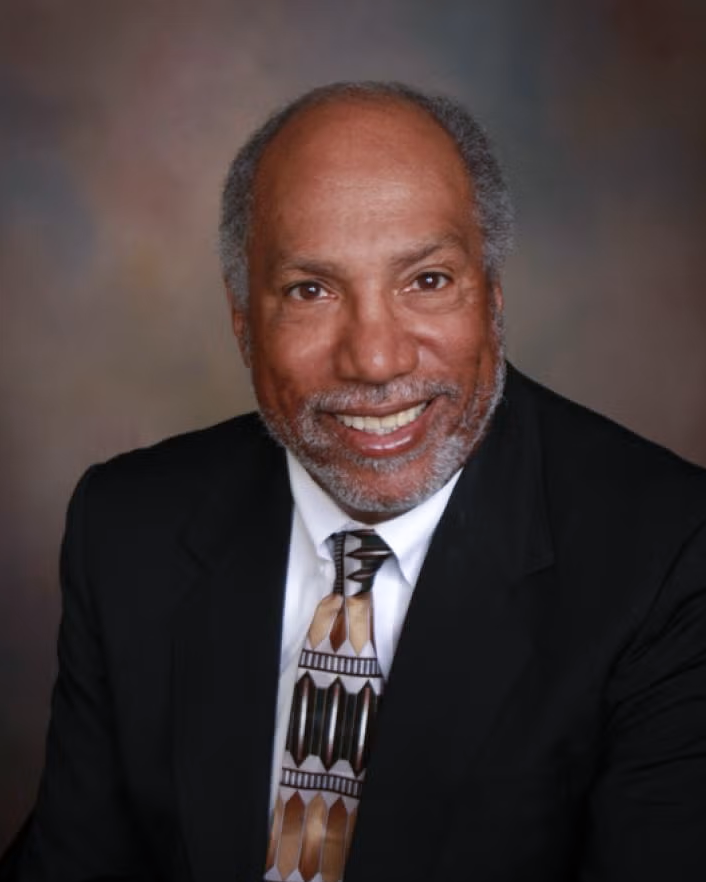
2016, William Harold “Sonny” Flowers, Jr. was awarded the George Norlin Award by the University of Colorado Boulder. Photo sourced from the University of Colorado Boulder.
Sonny loved being a trial lawyer and loved Boulder and the University of Colorado (CU). Sonny’s legacy to this community is that he was a fearless trial lawyer and that he was a champion for diversity in everything that he did. Sonny had a smile as wide as the ocean, a heart as big as the moon, and an intellect as deep as the Grand Canyon. I took that description from a Facebook posting by John Sadwith, the retired executive director of CTLA and a long-time friend of Sonny.
Sonny had no choice but to be a champion and a leader. His mother had a law degree from Howard University, like Kamala Harris, a PhD in Romance languages, and a PhD in literature. Sonny’s mom was one of the first Black public school teachers in Boulder. Sonny’s dad was a historic civil rights lawyer in the 40’s through the 60’s and led the desegregation efforts in Arkansas. He was the president of the national bar association. In the year when Black lawyers were not admitted to the American Bar Association. Sonny’s parents divorced at an early age, but shared custody. So, Sonny spent his school year in Boulder and his summers in Arkansas. Thus, Sonny saw firsthand the evils of discrimination and segregation from living with his father in the summer. His father taught him to shoot a gun so that he could protect his 8 brothers and sisters in times of trouble from the KKK and the segregationists. His mother instilled in him a global view. She sent Sonny to Spain for a semester in the 9th grade to further his education.
Life had not always been rosy for Sonny as a Black man, despite these accolades and leadership positions. Like most Black men, there have been several confrontations with the police: driving while Black, or worse, driving while Black with a girlfriend. Each had occurred in Sonny’s history. Notably, Sonny was bayonetted by the National Guard while participating in a protest in New Mexico in 1970. Notwithstanding these serious incidents, Sonny had kept his eyes on the prize: to be the best trial lawyer that he could be and to advance the cause of equal justice and racial inclusion in whatever leadership position he held.

1991, William Harold “Sonny” Flowers, Jr., and Gary M. Jackson
None of this could have occurred without his life partner of 40 years, Pam Flowers, who supported Sonny in all of his professional endeavors, as well as being a partner in all the fun things that we have done together such as our annual constitutional law retreat for 40 years at my family cabin, annual pig roast party for thirty years, fishing trips, and our travels to CU basketball and football games across the county, to Martha’s Vineyard to see the Black and white house in Oak Bluff, to the Negro Baseball Museum in Missouri (and the best ribs in the country), and the numerous legal conventions throughout the state and the country.
Sonny lived a life well lived and has enriched my life. Although he is not here, I know that he is still watching my back as I make “good trouble”.
ABOUT THE AUTHOR
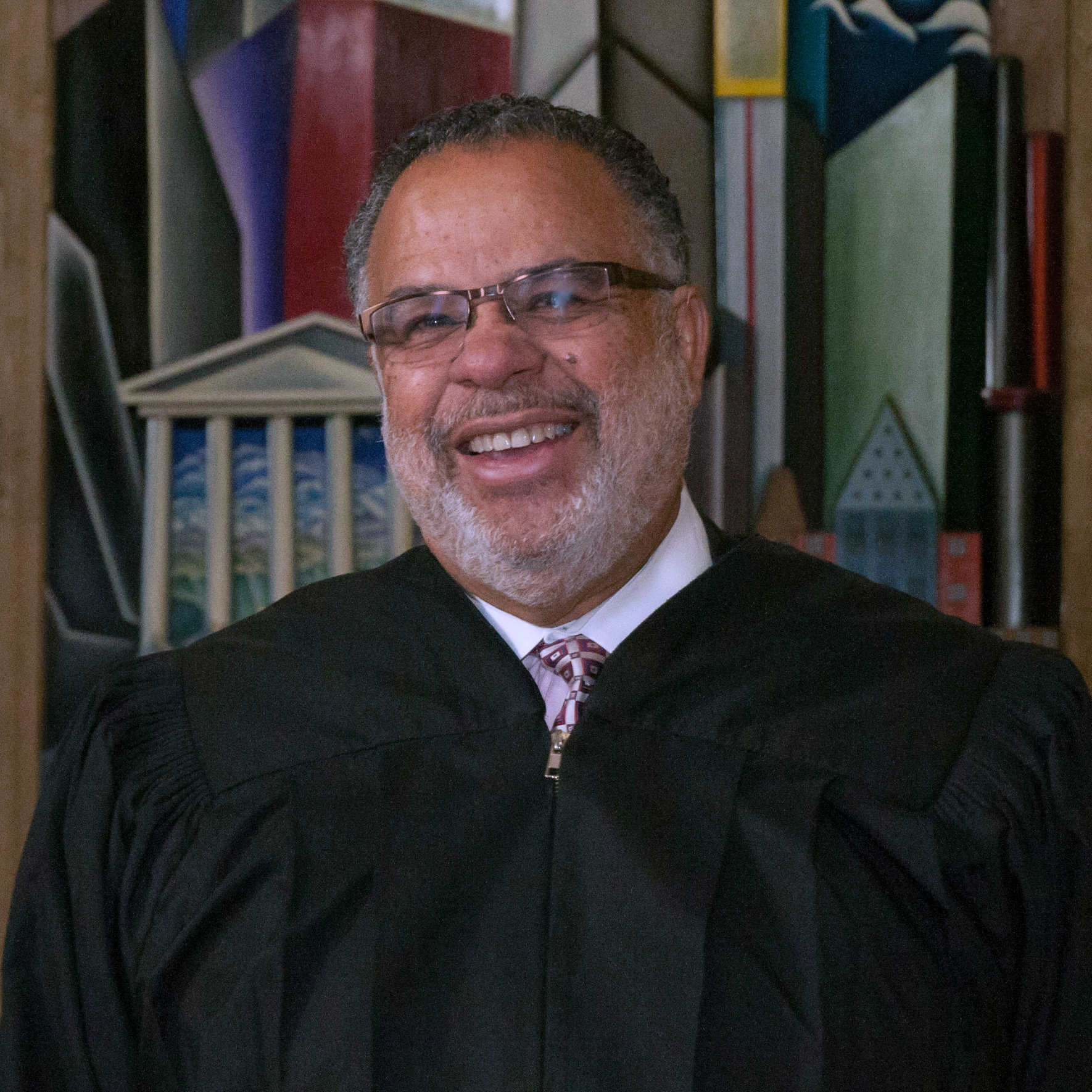
Hon. Gary M. Jackson is a Denver native, having lived in the north Cherry Creek area for 77 years. Gary graduated from George Washington High School in 1963, the University of Colorado at Boulder in 1967, and CU Law in 1970. With a celebrated legal career spanning five decades, Gary has been recognized with many accolades and awards. Gary, who retired in 2020, has received several awards, including: the Colorado Judicial Institute’s Judicial Excellence Award in 2018; the Monte Pascoe Civic Leadership Award by Denver Mayor Michael Hancock in 2018. Colorado Law Week’s Trial Judge of the Year in 2019; the Center for Legal Inclusiveness’ Hon. Wiley Daniel Lifetime Achievement Award in 2020; and several others. Gary has also been inducted into the National Bar Association’s Fred Gray Hall of Fame and the Denver Public Library’s Black Hall of Fame.